

- Reduced body thickness: Chassis heights often measure under 20mm compared to 35mm+ on standard mechanical keyboards.
- Shortened travel distance: Total key travel drops from the standard 4.0mm down to a swift 1.2mm through 2.0mm.
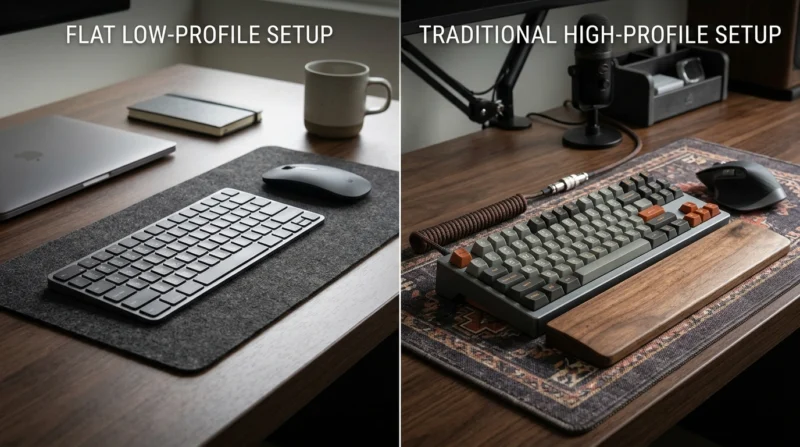
- Ergonomic wrist alignment: The low front lip eliminates the immediate requirement for external wrist rests.
Defining the Low Profile Keyboard
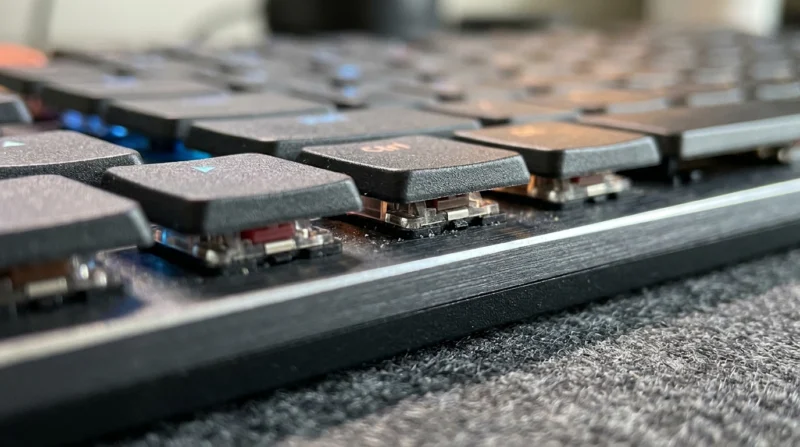
A low profile keyboard is an input device engineered with a significantly slimmer body, shorter keycaps, and reduced-height switches. Rather than resting high above the desk surface, these boards sit flat and close to the work surface. The physical design borrows the sleek profile of modern laptop keyboards while retaining the tactile response, build quality, and switch options of external mechanical keyboards.
Core Physical Characteristics
The primary visual and physical trait of any low profile keyboard is its reduction in vertical space. Standard mechanical keyboards use tall housings that elevate the switch stem and require deep keycaps to cover the mechanism. Low profile variants reduce the vertical footprint of every internal component. The bottom housing, spring, stem, and keycap are compressed vertically by 35 to 40 percent. This creates a streamlined typing surface that minimizes the distance your fingers must travel.
How It Differs from Traditional Keyboards
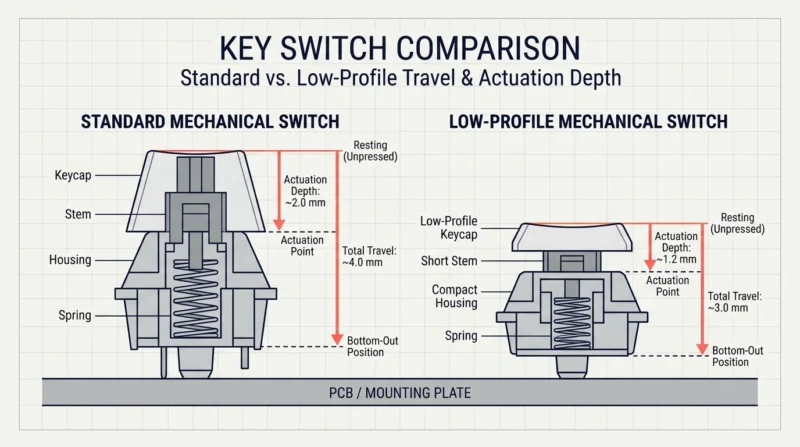
When comparing a traditional full-height mechanical keyboard to a low profile model, the structural differences are immediate. Traditional mechanical keyboards feature total key travel distances ranging from 3.5mm to 4.0mm. Low profile mechanical keyboards reduce total travel to between 1.2mm and 2.0mm. Actuation points, where the electrical circuit completes and registers your keystroke, drop proportionally from 2.0mm down to 1.0mm or less. This reduction alters how fast keystrokes register when you press A, SPACEBAR, or any other key.
Anatomy of Low Profile Switches and Keycaps
Understanding what makes these keyboards distinct requires examining the mechanical components housed beneath the top plate. The engineering challenge involves shrinking a complex mechanical switch mechanism without losing tactile feedback or durability.
Shorter Actuation and Key Travel
Low profile switches utilize redesigned internal stems and leaf springs. Because the entire switch housing is shorter, the travel distance is compressed. When you press a key on a standard switch, your finger descends deep into the board. On a low profile switch, the actuation happens almost instantly. This rapid triggering speed benefits fast-paced data entry and gaming, where every millisecond counts. Users transitioning from membrane office boards or laptop keyboards often find this shorter travel feels more natural than the deep plunges of a high-profile mechanical board.
The Role of Flat Keycaps
Keycaps on low profile keyboards are drastically thinner than standard profiles like OEM, Cherry, or SA. Traditional keycaps feature deep sculptured curves designed to cup your fingertips over a tall switch. Low profile keycaps are typically flat or feature a very shallow concave indentation. This flat design keeps the top surface uniform across the entire keyboard, preventing the fingers from catching on tall edges when transitioning between rows using TAB, CAPS LOCK, or SHIFT.
Key Advantages of Using a Low Profile Board
Typists and professionals adopt low profile boards for specific functional benefits related to physical comfort, desk footprint, and transportability.
Ergonomics and Wrist Comfort
Ergonomics improve significantly due to the reduced height of the front edge. On a standard mechanical keyboard, the front lip often sits 20mm to 30mm high, forcing your wrists into an unnatural upward extension unless you use a thick wrist rest. Low profile keyboards feature front edges measuring under 15mm. This lower profile allows your hands to rest in a flatter, more neutral position relative to the desk surface, reducing strain during extended typing sessions.
Portability and Minimalist Esthetics
The slim chassis makes low profile keyboards much easier to slide into a backpack alongside a laptop or tablet. Their reduced weight and thin profile appeal directly to remote workers and digital nomads who want a mechanical typing experience without carrying heavy, bulky hardware. Visually, they offer a clean, minimalist aesthetic that blends into modern office environments.
Tradeoffs to Consider Before Buying
Despite their ergonomic and speed advantages, low profile keyboards introduce certain compromises that users must evaluate against their preferences.
Typing Feel and Customization Limits
The shortened travel distance removes the deep cushioning bottom-out feel that many mechanical keyboard enthusiasts prefer. Furthermore, customization is restricted. Because low profile switch stems (such as Choc or proprietary scissor-mechanisms) do not use standard Cherry MX cross-stems, finding aftermarket keycaps is difficult. If you enjoy swapping keycap sets, a low profile board offers very limited options.
Sound Profile and Feedback
The acoustic footprint of a low profile keyboard differs notably from deep-profile boards. With less empty internal volume and shorter travel, these keyboards produce a sharper, higher-pitched sound rather than the deep thock associated with heavily modified custom mechanical keyboards. Tactile variants still offer a distinct bump, but clicky variants produce a crisp, high-frequency snap.
Frequently Asked Questions
What does a low profile keyboard mean?
A low profile keyboard features a significantly thinner body, shorter keycaps, and reduced-height mechanical switches that sit much closer to your desk than traditional boards.
Are low profile keyboards better for typing speed?
Many users find that the shorter key travel distance and quicker actuation points allow for faster, lighter keystrokes, particularly if they are accustomed to laptop keyboards.
Do low profile keyboards require a wrist rest?
Because their front edge is noticeably lower than standard mechanical keyboards, most users do not need a wrist rest to maintain a neutral and comfortable hand position.
Can you replace keycaps on a low profile keyboard?
Keycap customization is quite limited on low profile keyboards because switch stems and layouts vary widely between manufacturers compared to standard Cherry MX styles.